How to Choose the Right Dog Food for Your Pet's Needs

Learning to Read Labels & Choose the Perfect Dog Food for Your Pet's Specific Needs
The Ultimate Guide to Selecting the Perfect Dog Food
Choosing the right dog food is one of the most important decisions you'll make for your pet's health and wellbeing. With thousands of options available, this comprehensive guide will help you navigate the confusing world of dog nutrition and select the best food for your dog's specific needs.
"Feeding your dog isn't about finding the 'best' food - it's about finding the right food for YOUR dog. Nutrition should be as individual as your pet."
— Dr. Amanda Richardson, Veterinary Nutritionist
Understanding Your Dog's Nutritional Requirements
Key Nutritional Factors to Consider:
- Life Stage: Puppy, adult, senior, or all-life-stages
- Breed Size: Small, medium, large, or giant breed formulas
- Activity Level: Couch potato, moderately active, or working dog
- Health Conditions: Allergies, kidney issues, joint problems, etc.
- Body Condition: Underweight, ideal, or overweight
- Taste Preferences: What your dog actually enjoys eating
Step 1: Understanding Dog Food Labels
Decoding the Guaranteed Analysis:
| Nutrient | What It Means | Ideal Ranges | Special Considerations |
|---|---|---|---|
| Crude Protein | Total protein content (from all sources) | 18-25% for adults, 22-32% for puppies | Higher for active/working dogs, lower for kidney issues |
| Crude Fat | Total fat content | 5-15% for most dogs | Higher for active dogs, lower for weight loss |
| Crude Fiber | Indigestible plant material | 2-5% for most dogs | Higher for weight management, lower for puppies |
| Moisture | Water content | Max 10% for dry food, 75-85% for wet | Canned food helps with hydration |
| Ash | Mineral content | Usually 5-8% | Lower for urinary health issues |
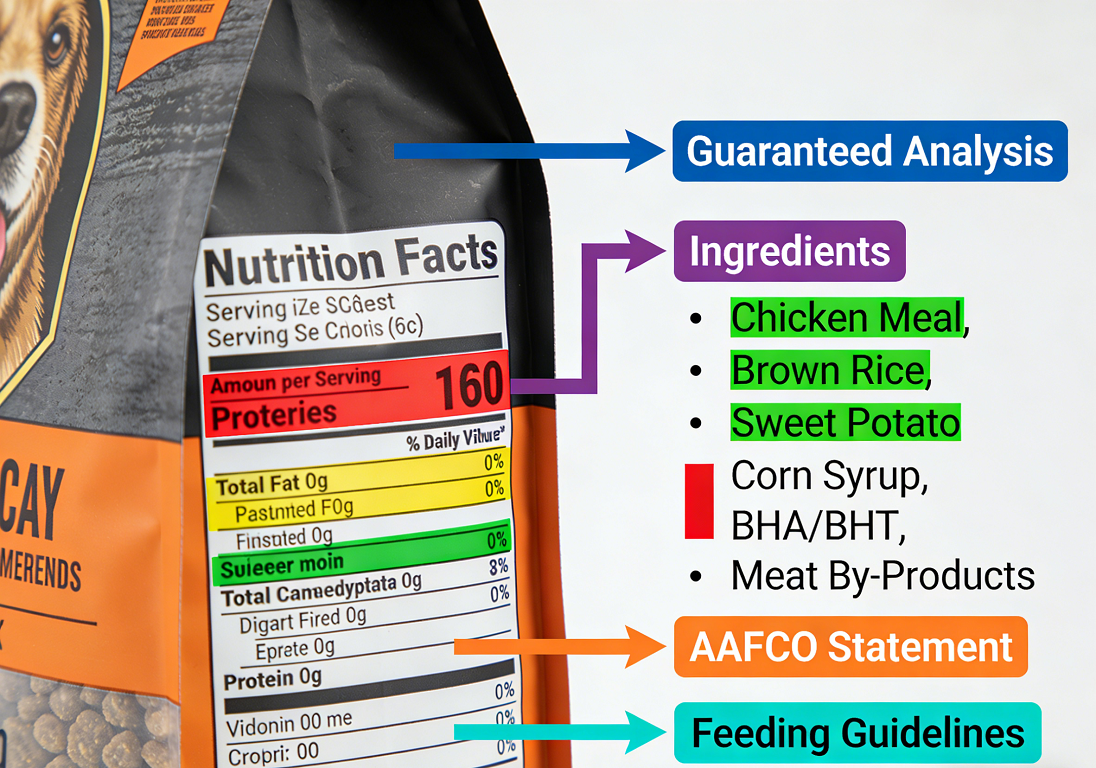
Learning to read labels helps choose better nutrition
AAFCO Statements - What They Really Mean:
"Complete and Balanced" Statements:
- "For Growth": Meets puppy nutritional requirements
- "For Maintenance": Meets adult dog requirements
- "For All Life Stages": Meets requirements for all ages
- "For Gestation/Lactation": For pregnant/nursing dogs
- "For Intermittent/Supplemental": NOT complete nutrition
How AAFCO Testing Works:
- Feeding Trials: Food tested on actual dogs (gold standard)
- Formulation Method: Meets nutrient profiles on paper only
- Look for: "Animal feeding tests using AAFCO procedures"
- Avoid: "Formulated to meet AAFCO nutrient profiles" alone
Step 2: Reading and Understanding Ingredients
What to Look For:
- Named Protein Sources: "Chicken meal" not "poultry meal"
- Whole Meat vs. Meal: Both can be good quality
- Carbohydrate Sources: Whole grains vs. grain fragments
- Fat Sources: Named animal fats or quality oils
- Preservatives: Natural (mixed tocopherols) vs. chemical (BHA/BHT)
- Avoid: Artificial colors, unnamed by-products, excessive fillers
| Ingredient | What It Is | Quality Indicator |
|---|---|---|
| Chicken Meal | Concentrated chicken protein (water removed) | High quality, consistent protein source |
| Corn Gluten Meal | Protein concentrate from corn | Less expensive protein, potential allergen |
| Animal Fat | Unspecified fat source | Lower quality - could be any animal |
| Chicken Fat | Specific fat source | Higher quality, named source |
| Beet Pulp | Fiber source from sugar beets | Moderate quality fiber, helps stool formation |
| Cellulose | Purified wood pulp (fiber) | Low quality filler, provides bulk only |
Step 3: Matching Food to Life Stage
Small Breed Puppies:
- Calorie Density: Higher calories per cup
- Kibble Size: Very small pieces
- Growth Period: Feed until 9-12 months
- Key Nutrients: DHA for brain development
- Protein: Minimum 22%
- Fat: Minimum 8%
Large/Giant Breed Puppies:
- Calorie Control: Controlled growth formula
- Calcium/Phosphorus: Specifically balanced
- Growth Period: Feed until 18-24 months
- Key Nutrients: Glucosamine for joints
- Protein: 22-26% (not too high)
- Fat: 8-12% (moderate)
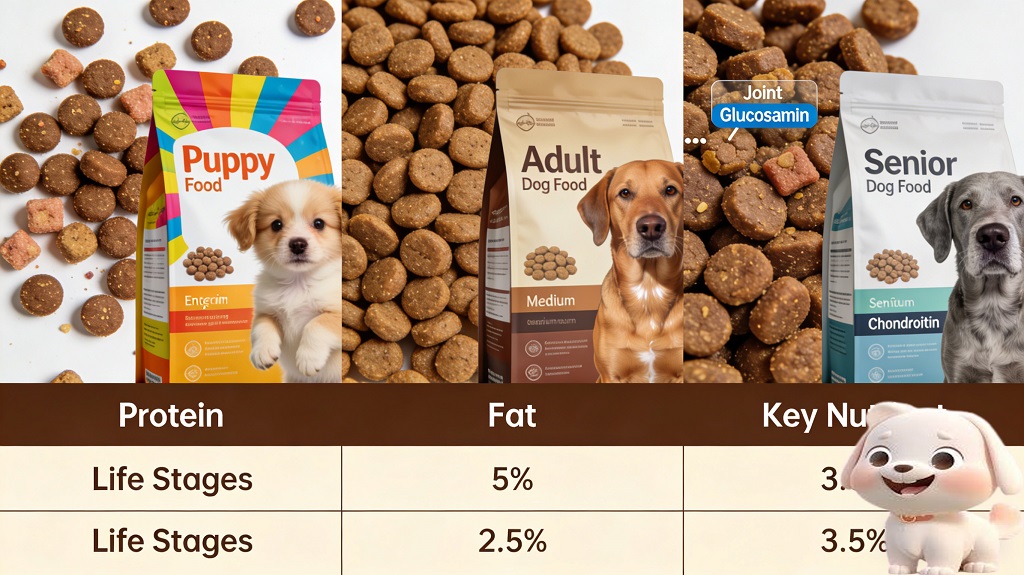
Each life stage requires specific nutritional formulas
Adult Dog Requirements:
- Protein: Minimum 18% (higher for active dogs)
- Fat: 5-15% depending on activity level
- Calories: Based on ideal weight and activity
- Key Considerations: Dental health, weight management
- Special Formulas: Breed-specific, activity-specific
- Transition: Switch from puppy food around 12 months
Senior Dog Food (7+ years):
| Senior Needs | Food Features | What to Look For |
|---|---|---|
| Joint Health | Glucosamine, chondroitin, omega-3s | Added joint supplements, fish oil |
| Weight Management | Lower calories, higher fiber | L-carnitine, controlled fat content |
| Kidney Support | Reduced phosphorus, high-quality protein | Lower ash content, controlled minerals |
| Digestibility | Highly digestible ingredients | Prebiotics, easily digestible proteins |
| Dental Health | Special kibble texture | Dental care formulas, smaller kibble if dental issues |
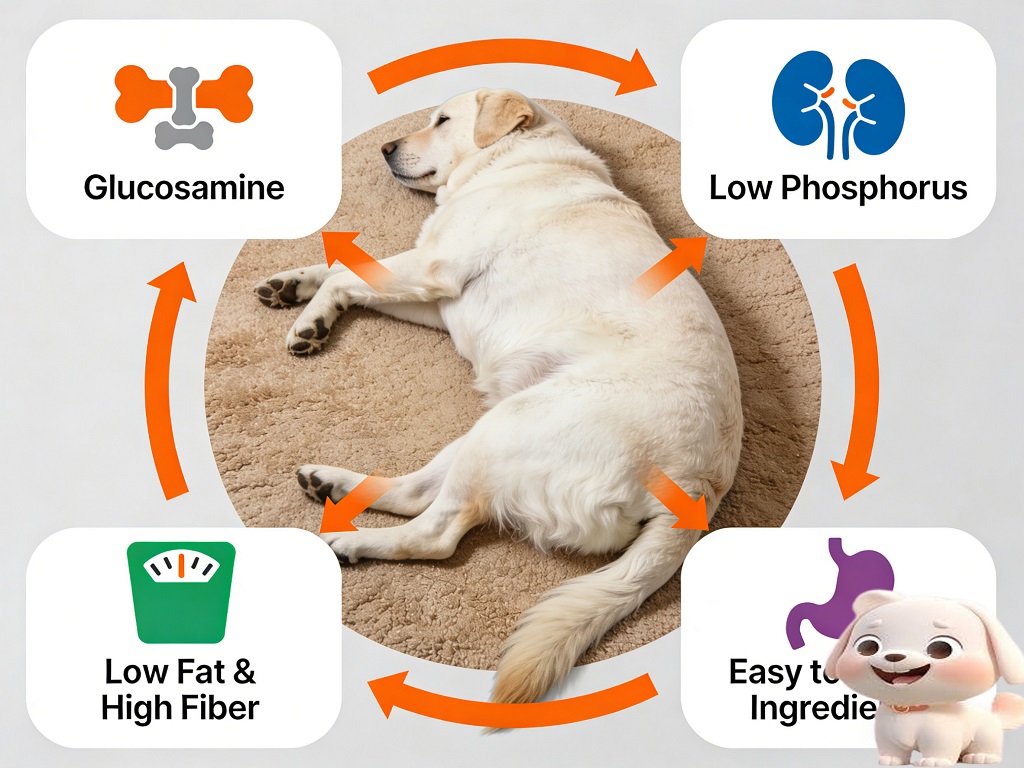
Specialized formulas support aging dogs' health needs
Step 4: Special Dietary Considerations
Common Allergens:
- Protein Sources: Beef, chicken, dairy, eggs
- Grains: Wheat, corn, soy
- Other: Artificial colors/preservatives
Alternative Options:
- Limited Ingredient: Fewer ingredients to identify triggers
- Novel Protein: Duck, venison, kangaroo, rabbit
- Hydrolyzed Protein: Broken down proteins less allergenic
- Grain-Free: Alternative carbohydrate sources
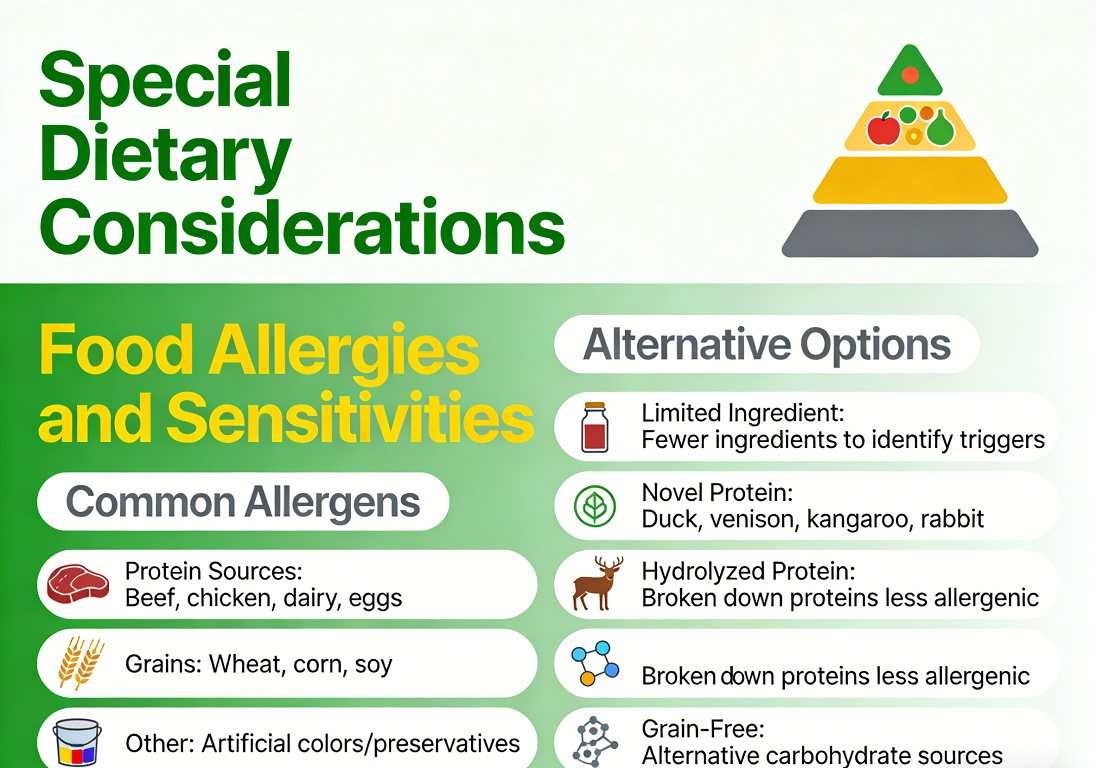
Special diets help dogs with food sensitivities thrive
Prescription and Therapeutic Diets:
- Kidney Disease: Reduced phosphorus, controlled protein
- Urinary Health: Controlled minerals, increased moisture
- Pancreatitis: Very low fat, highly digestible
- Diabetes: High fiber, complex carbohydrates
- Heart Disease: Reduced sodium, added taurine
- Gastrointestinal: Highly digestible, prebiotics
- Weight Management: High fiber, L-carnitine, controlled calories
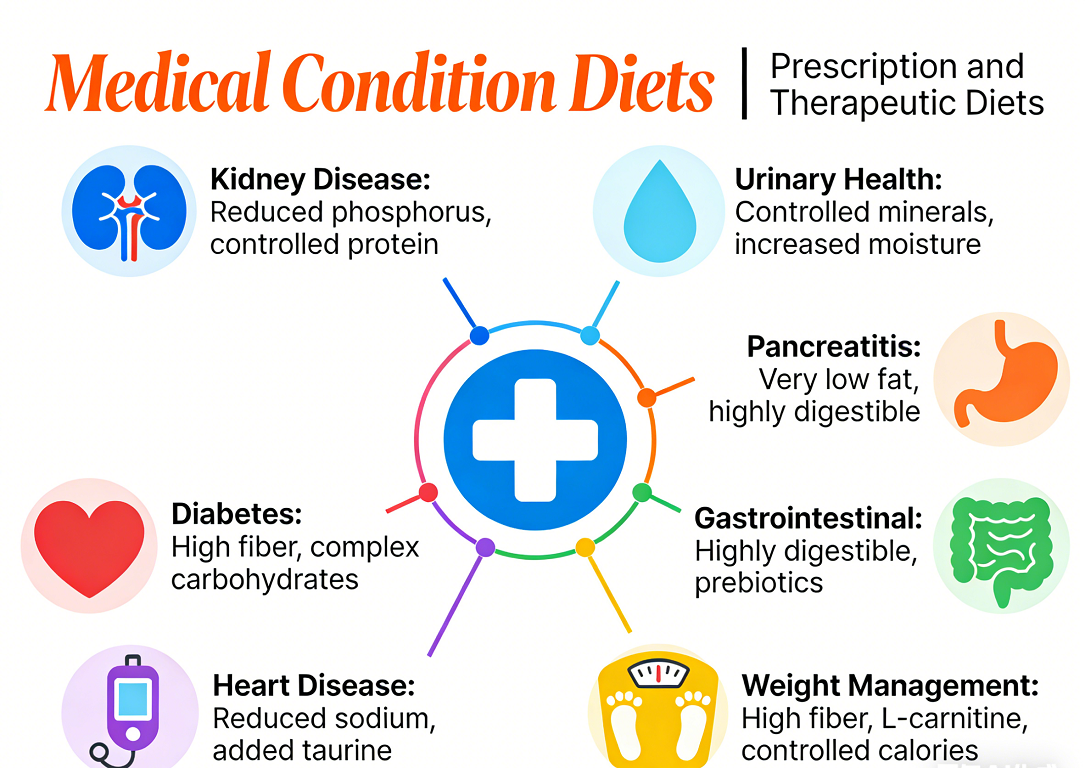
Different food types offer unique benefits and considerations
Step 5: Dry Food vs. Wet Food vs. Raw vs. Fresh
| Food Type | Pros | Cons | Best For |
|---|---|---|---|
| Dry Food (Kibble) | Cost-effective, convenient, dental benefits, long shelf life | Lower moisture, more processing, palatability issues | Most dogs, budget-conscious owners, dental health |
| Wet Food (Canned) | Higher moisture, more palatable, easier to eat | More expensive, spoils quickly, dental issues | Senior dogs, picky eaters, hydration issues |
| Raw Food | Natural ingredients, high palatability, less processing | Bacterial risk, nutritional balancing, expensive, inconvenient | Owners committed to food safety and balancing |
| Fresh/Refrigerated | High quality, minimal processing, palatable | Expensive, short shelf life, requires refrigeration | Budget-allowed owners, dogs with sensitivities |
| Freeze-Dried | Convenient, retains nutrients, long shelf life | Expensive, requires rehydration | Travel, training treats, supplementing |
Step 6: Budget Considerations and Cost Analysis
Cost Comparison Guide:
- Economy Brands: $0.50-$1.50 per day
- Mid-Range Brands: $1.50-$3.00 per day
- Premium Brands: $3.00-$5.00 per day
- Super Premium: $5.00-$8.00 per day
- Prescription Diets: $3.00-$6.00 per day
- Fresh/Raw: $5.00-$15.00+ per day
Cost-Saving Strategies:
- Buy in bulk (check expiration dates)
- Subscribe and save programs
- Mix premium with mid-range foods
- Use coupons and loyalty programs
- Consider cost per feeding, not per bag
- Prevent health issues through good nutrition
Step 7: How to Properly Transition Foods
7-Day Transition Schedule:
- Days 1-2: 75% old food, 25% new food
- Days 3-4: 50% old food, 50% new food
- Days 5-6: 25% old food, 75% new food
- Day 7: 100% new food
Important: Extend to 10-14 days for sensitive dogs or major formula changes. Monitor stool consistency throughout transition.
Proper transitioning prevents digestive upset when changing foods
Signs of a Good Food Transition:
- Normal, firm stools
- Good appetite and enthusiasm for food
- Healthy skin and coat
- Appropriate energy levels
- Maintenance of ideal body weight
- No vomiting, diarrhea, or excessive gas
Step 8: Monitoring and Adjusting
| Assessment Area | What to Monitor | When to Consider Change |
|---|---|---|
| Body Condition | Weight, rib coverage, waist definition | Weight gain/loss, difficulty maintaining ideal weight |
| Coat and Skin | Shine, shedding, itching, hot spots | Dull coat, excessive shedding, skin issues |
| Energy Levels | Activity, playfulness, endurance | Lethargy or hyperactivity |
| Digestive Health | Stool consistency, frequency, gas | Chronic diarrhea, constipation, excessive gas |
| Overall Health | Dental health, breath, tear staining | Dental issues, bad breath, chronic health problems |
Red Flags: When to Consult Your Veterinarian
"Never make major dietary changes without veterinary guidance if your dog has health issues. What works for one dog could harm another with different medical conditions."
— Dr. Benjamin Carter, Board-Certified Veterinary Nutritionist
Seek Veterinary Advice If:
- Your dog has chronic health conditions
- You notice sudden weight loss or gain
- Persistent digestive issues despite food changes
- Severe food allergies or sensitivities
- Considering homemade or raw diets
- Your dog is pregnant, nursing, or a growing puppy
- You're switching to prescription/therapeutic diet
- Uncertain about nutritional requirements
Dog Food Selection Checklist
Final Decision-Making Guide:
- ✓ Appropriate for life stage and breed size
- ✓ Complete and balanced per AAFCO standards
- ✓ High-quality, named protein sources first
- ✓ Appropriate calorie content for activity level
- ✓ Addresses any specific health concerns
- ✓ Fits within your budget realistically
- ✓ Your dog enjoys eating it
- ✓ Available consistently in your area
- ✓ Backed by company with good reputation
- ✓ Produces healthy stools and good energy
A comprehensive checklist ensures all factors are considered
Conclusion: Finding Your Dog's Perfect Match
Choosing the right dog food is a journey, not a destination. Your dog's nutritional needs will change throughout their life, and being attentive to their response to different foods is key. The best food for your dog is one that meets their nutritional requirements, fits your lifestyle and budget, and most importantly - keeps your dog healthy, happy, and thriving.
Remember that no single food is perfect for every dog. What works beautifully for one may not work for another. Be patient, observant, and willing to make adjustments as needed. Your attention to your dog's nutrition is one of the greatest gifts you can give them for a long, healthy life.
"The right food should nourish your dog's body and bring joy to mealtimes. When you find that perfect match, you'll see it in their health, energy, and overall wellbeing."
About the Author
Jessica Miller is a certified canine nutrition consultant with 12 years of experience advising pet food companies and veterinary practices. She holds a Master's degree in Animal Nutrition and regularly conducts workshops helping pet owners navigate the complex world of pet food selection and nutrition.